What is it?
NuChef
Real-Time Nutritional Intelligence for Health-Conscious Cooking
Multimodal AI Orchestration
AI Integration
Complex Systems Design
Health-Aware Systems
Role
Product/UX Designer
Systems Architect
Timeline
4-day hackathon (Google AI Hackathon 2026)
Tools/Skills
Google Gemini 3 Vision & Reasoning APIs
Figma
NuChef is a multimodal AI system that monitors cooking in real-time via computer vision, flags health risks as they occur, suggests ingredient substitutions mid-cook, and generates comparative nutritional reports. It enables people with chronic conditions to cook freely while staying within medical guidelines.
The Problem
38 million Americans live with diabetes. 108 million have hypertension. Their daily cooking involves constant mental math: tracking carbs, monitoring sodium, calculating portions—all while trying to enjoy food.
Existing solutions fail because they operate at the wrong time:
- Recipe databases assume you'll follow instructions perfectly (you won't)
- Meal logging apps require tedious post-meal data entry (when it's too late to adjust)
- Smart scales force you to pre-measure everything (killing spontaneity)
The Core Insight
People need feedback during cooking, when they can still make changes, not before or after .
System Architecture Overview
People managing chronic health conditions face exhausting daily calculations—tracking every ingredient, second-guessing decisions. They deserve tools that reduce this burden, not add to it. I designed NuChef to handle complexity invisibly: users upload a photo and say "Hey Chef" while the system orchestrates computer vision, constraint reasoning, and nutrition calculation in the background.
I applied behavioral psychology principles—celebrating wins, reframing deviations as learning, providing specific encouragement—through thoughtful data presentation that respects users' intelligence. The AI's reasoning is always transparent (users see why something's flagged and what alternatives exist) because trust requires understanding, not blind compliance.
The Result
The result is that sophisticated AI that feels effortless and respectful. Users maintain creative control while the system quietly manages multi-constraint optimization and health validation. Complex systems feel simple when designed with genuine care for the people using them.
Screen by Screen Display
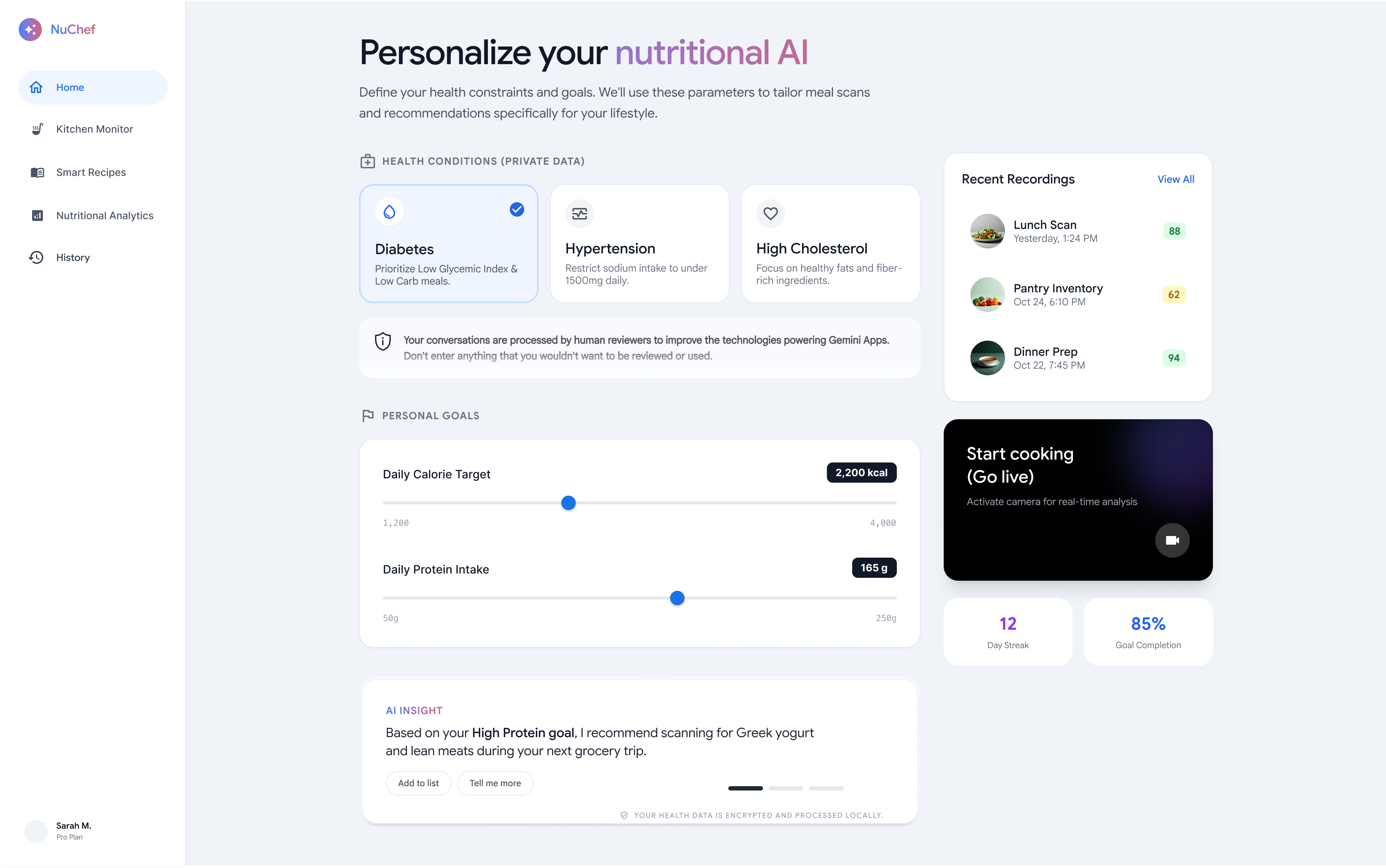
SCREEN 1
Personalized Health Configuration
Transform abstract medical limits into concrete, personalized cooking constraints
Key Design Decisions
Users with chronic conditions need to set medical limits, but abstract numbers like "1500mg sodium" don't translate to cooking decisions. I designed an interface that transforms clinical constraints into actionable parameters:
- Visual health cards with icons instead of checkboxes—reframes limits as guardrails, not restrictions
- Interactive sliders (2,200 kcal, 165g protein) with live feedback—emphasizes user control
- Longitudinal tracking with past scores (88, 62, 94) and 12-day streak—builds habit momentum
- Proactive AI insights connecting goals to actions ("Based on High Protein goal, scan for Greek yogurt")
Impact
Health limits feel like personalized guardrails, not restrictions. Streak mechanics create habit momentum. Users control parameters that govern entire AI system.
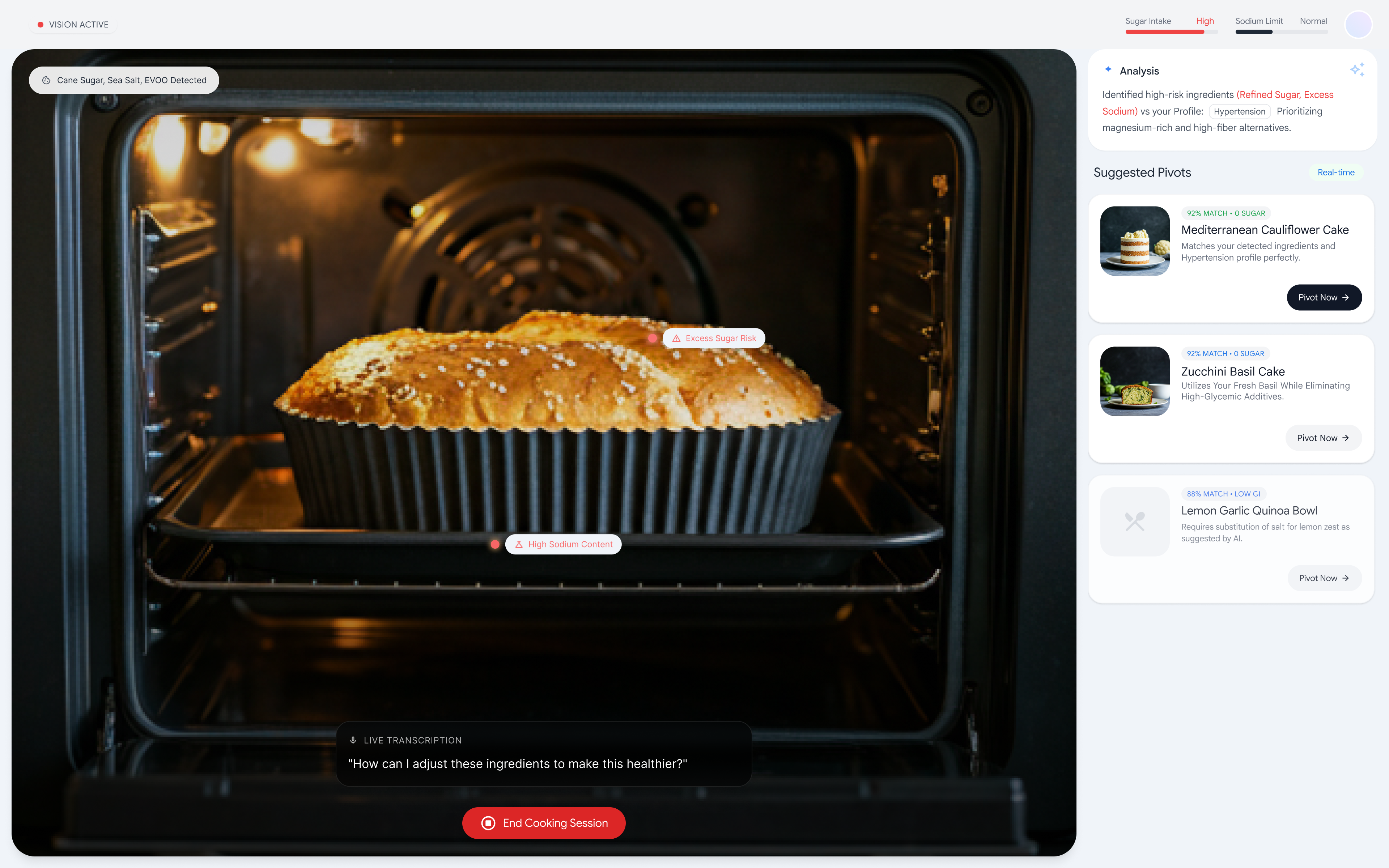
SCREEN 2
Recipe Decision Engine
Provide real-time health risk assessment while cooking is still in progress
Key Design Decisions
Users need health warnings during cooking (when adjustments are possible), not after. Generic warnings don't provide actionable guidance. I designed real-time intervention that flags risks and offers executable alternatives:
- Spatial warning badges appear directly on food in camera view
- Transparent reasoning panel exposes AI logic: "Identified Refined Sugar vs Hypertension profile → Prioritizing magnesium alternatives"
- One-tap recipe pivots (Mediterranean Cauliflower Cake: 92% match, 0g sugar)
- Live conversational layer for Q&A during cooking
Impact
Users see warnings on actual ingredients (not abstract text), understand why they're flagged, and can pivot to healthier alternatives in one tap. System transforms "don't eat this" into "eat this instead."
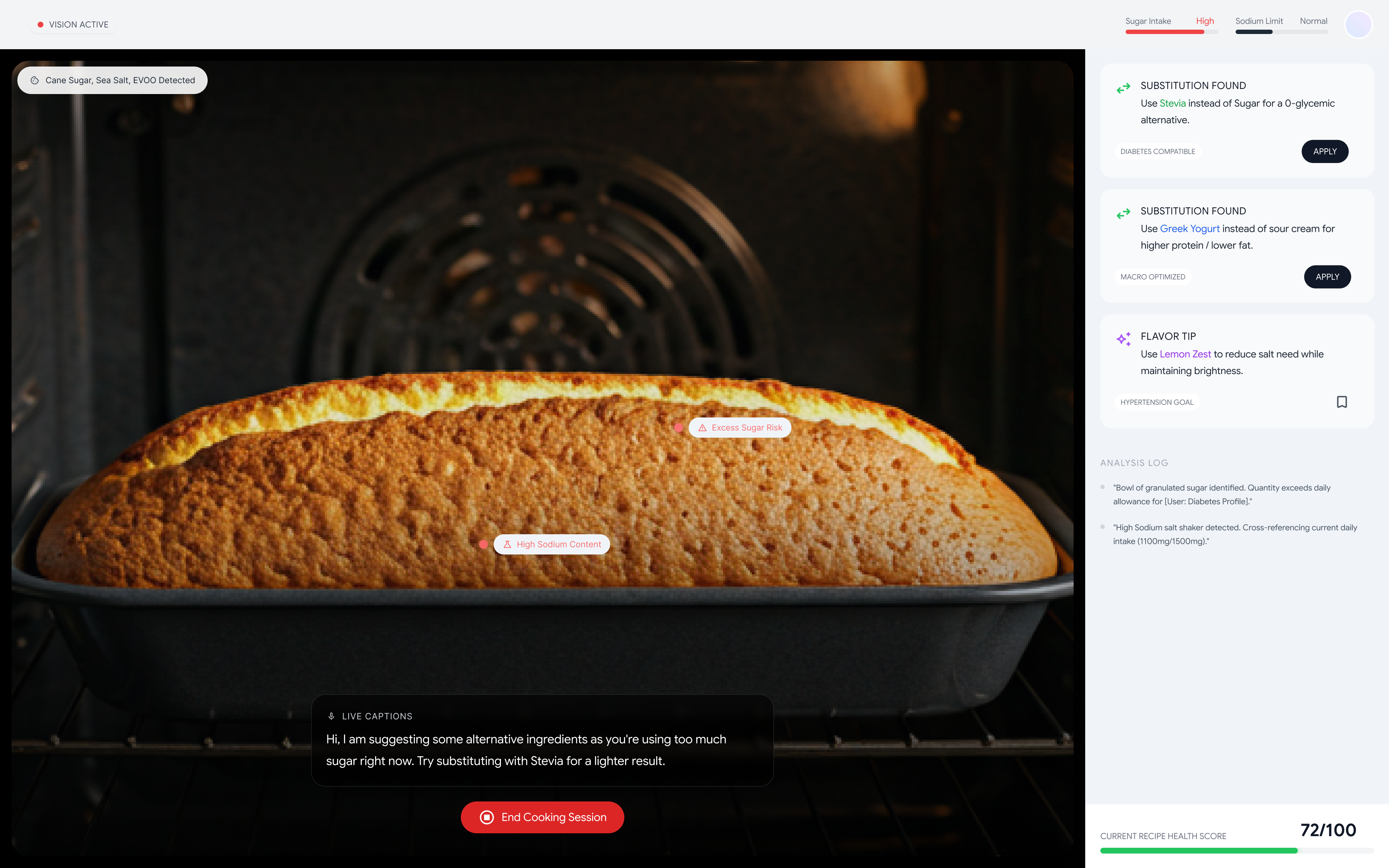
SCREEN 3
Live Cooking Mode (Vision Active)
Provide real-time health risk assessment while cooking is still in progress
Key Design Decisions
Health advice is typically abstract ("reduce sugar"). I designed a substitution system that performs multi-constraint optimization (health + culinary + goals) while presenting simple, actionable cards:
- Executable swap cards: "Use Stevia instead of Sugar [APPLY]" with health rationale
- Visual hierarchy: Green SUBSTITUTION (urgent) vs purple FLAVOR TIP (optional)
- Transparent calculation log showing detection → validation → recommendation pipeline
- Real-time health score (72/100) that updates with each swap—gamifies optimization
Impact
Users get concrete actions ("swap this for that") instead of generic advice. Each suggestion satisfies health constraints, culinary equivalence, and macro goals simultaneously. Score gamification drives optimization.
SCREEN 4
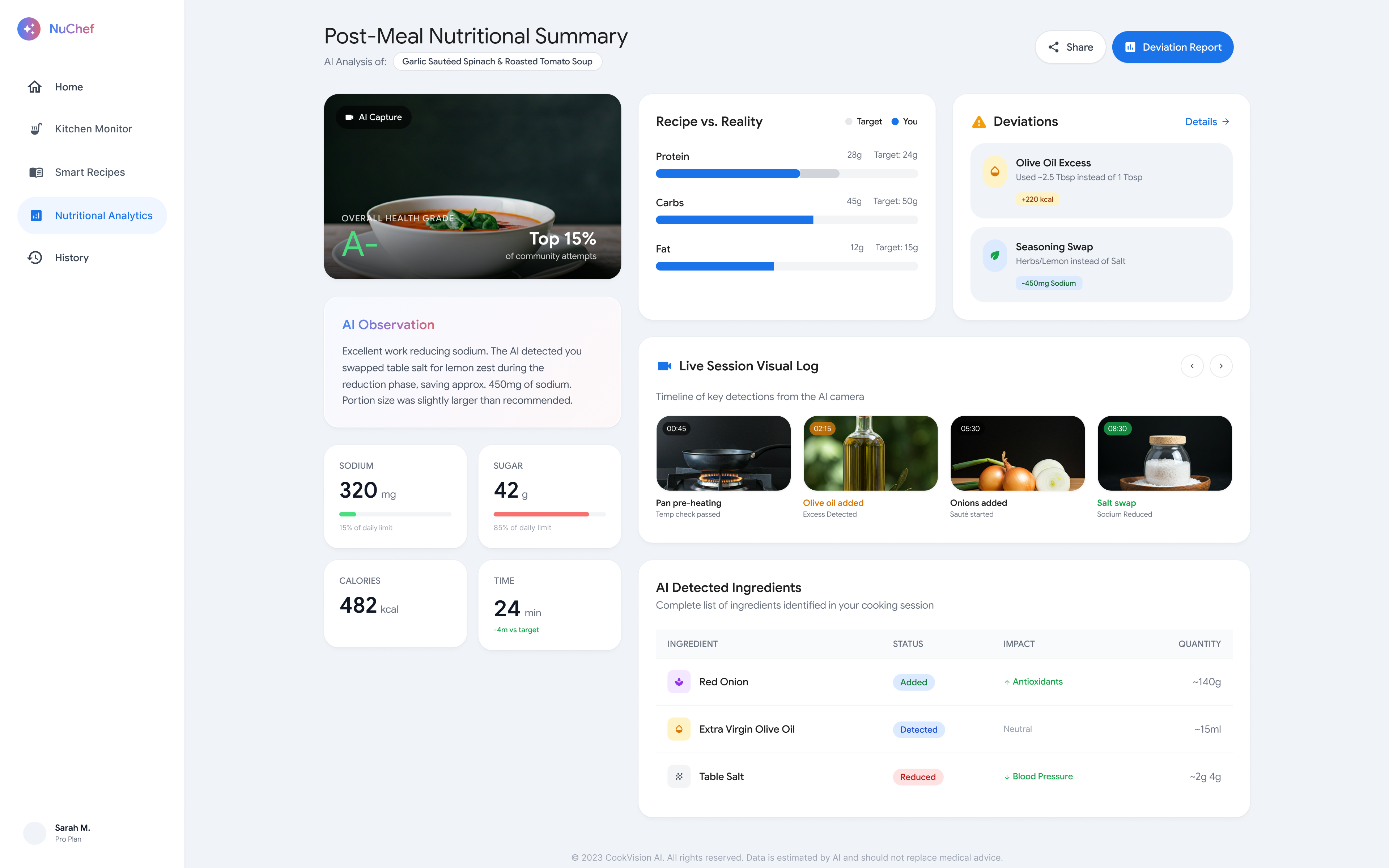
Post-Cooking Summary
Provide real-time health risk assessment while cooking is still in progress
Key Design Decisions
Traditional health apps frame cooking deviations as failures. I designed post-cooking analysis that reinforces positive behaviors and reframes deviations as learning opportunities:
- Dual validation: Grade A + Top 15% community ranking—aspirational without shame
- Non-judgmental comparison: Target vs. Actual bars (blue = achieved, gray = headroom, no red)
- Neutral deviation framing: Both Oil Excess (⚠ +220 kcal) and Seasoning Swap (✓ -450mg) labeled "deviation"
- Specific behavioral praise: "Swapped salt for lemon zest during reduction, saving 450mg"
- Visual timeline with timestamped screenshots—episodic memory aid and trust-building
Impact
Deviations feel neutral (data) not punitive (failure). Specific praise reinforces exact behaviors to repeat. Community comparison creates accountability without shame. Timeline proves AI was actively watching, building trust.
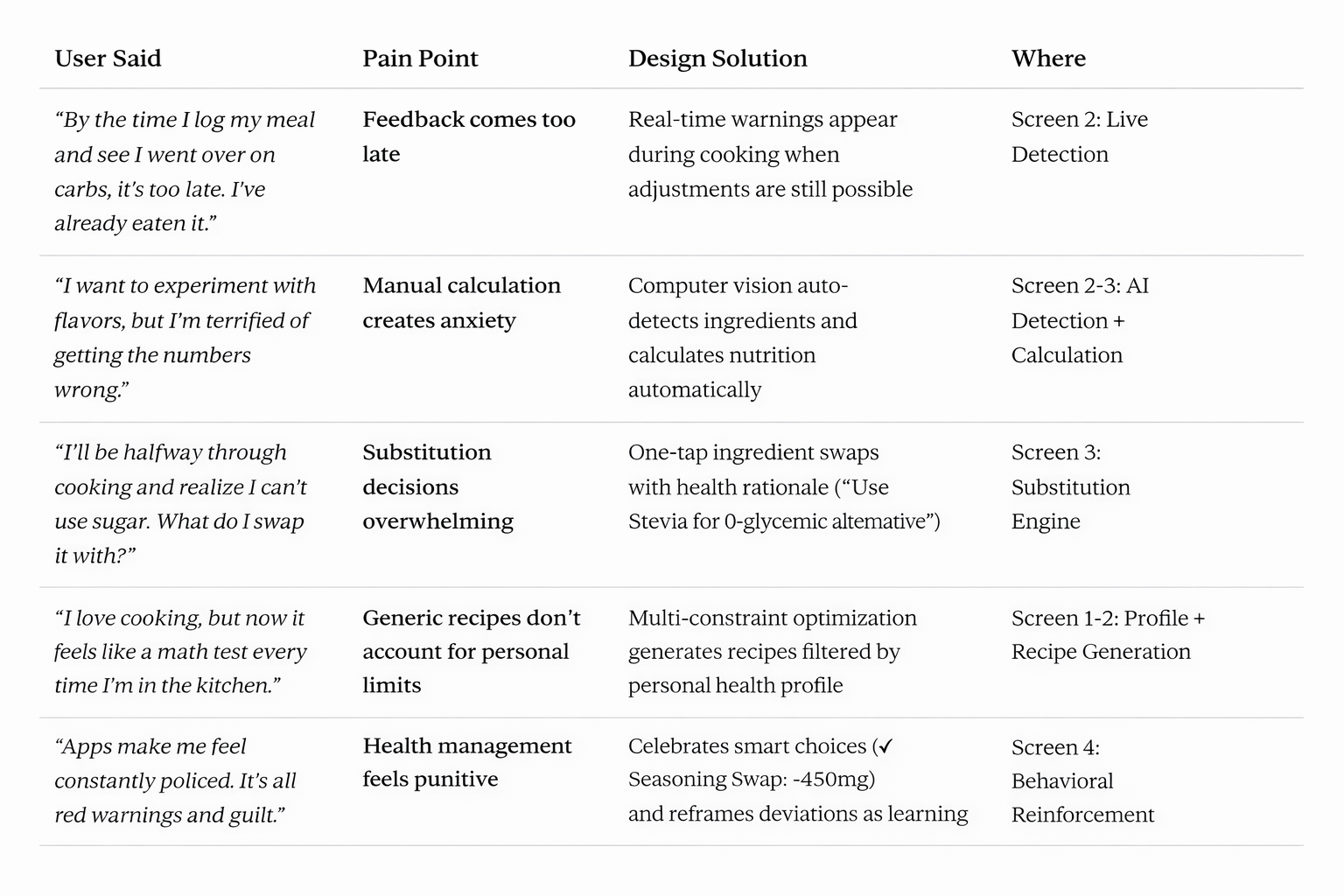
User Research
Pain Points
People with chronic health conditions like diabetes and hypertension—over 146 million Americans—face a daily challenge: they want to cook freely and creatively, but must constantly calculate nutrition to stay within medical limits. Traditional tracking apps and generic recipes create high cognitive load, forcing users to choose between creative cooking and health safety.

Manual Tracking is Tedious and Error-Prone
Generic recipes don't show health compatibility upfront. Users must manually calculate if a dish is safe, often giving up and choosing restrictive meal plans instead.
Feedback Comes Too Late
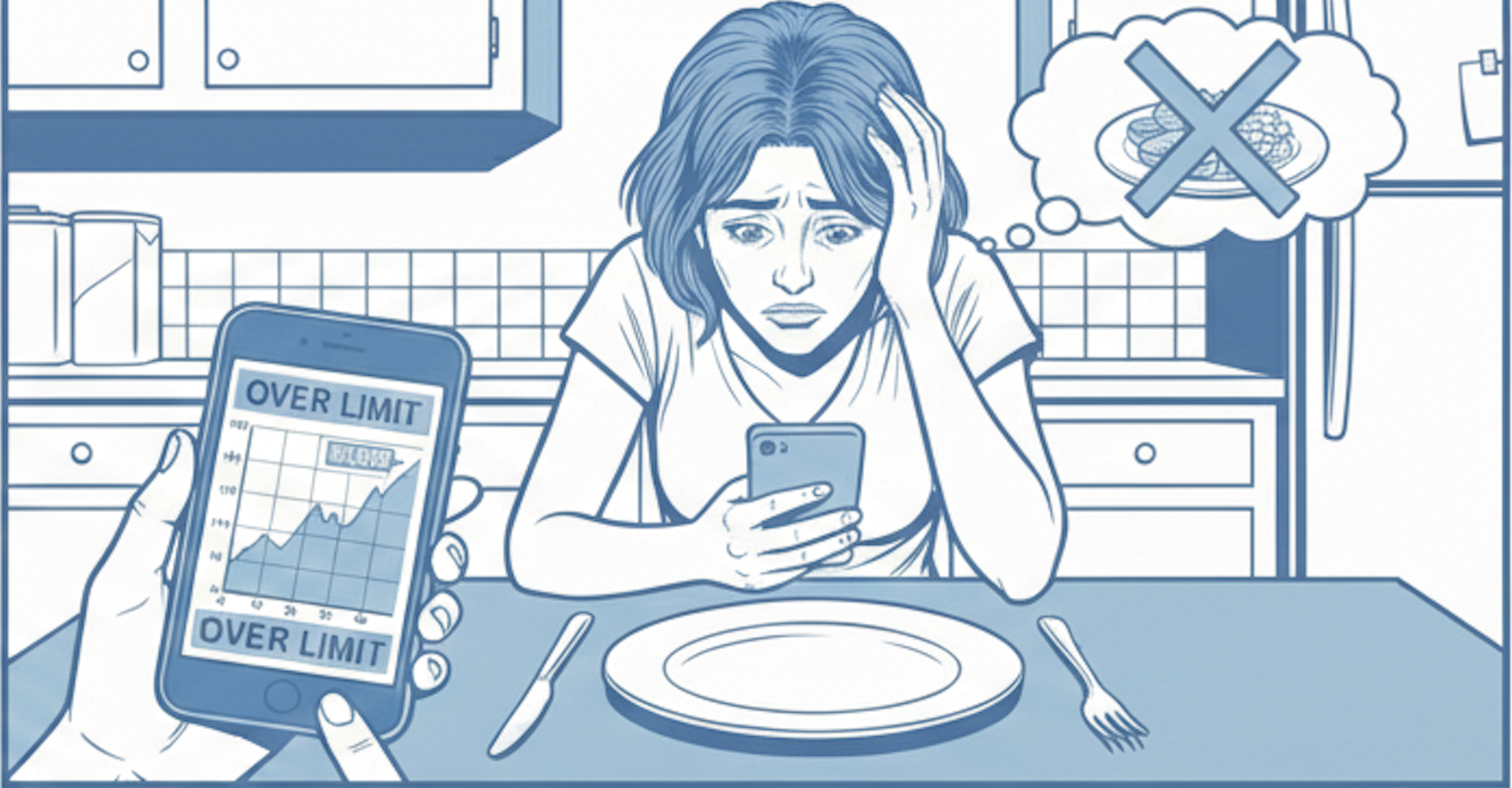
Traditional health apps show nutrition totals after the meal is eaten. Feedback comes too late, users can't adjust what they've already consumed.
Recipes Don't Account for Personal Health Limits
Generic recipes don't indicate if they're diabetes-safe or hypertension-friendly. Users must manually calculate and often give up, choosing restrictive meal plans over creative cooking.
Substitution Decisions are Overwhelming
When users realize an ingredient violates their health limit mid-cook, they don't know what to swap it with. "Reduce sugar" doesn't help when you're halfway through a recipe.
Target Users
People with chronic health conditions like diabetes and hypertension—over 146 million Americans—face a daily challenge: they want to cook freely and creatively, but must constantly calculate nutrition to stay within medical limits. Traditional tracking apps and generic recipes create high cognitive load, forcing users to choose between creative cooking and health safety.
Adults with chronic health conditions (diabetes, hypertension, high cholesterol) who want to cook creatively but struggle with real-time nutrition tracking and health-safe decision-making during meal preparation.
For many people managing diabetes, hypertension, or high cholesterol, cooking has transformed from a creative outlet into an anxiety-inducing math test. Existing tools require complex mental arithmetic (tracking cumulative sodium across all ingredients), provide feedback only after it's too late to adjust (post-meal nutrition summaries), and offer vague health advice ("reduce sugar") without concrete substitutions. These interfaces feature scattered information, unclear guidance on what's safe, and punitive framing of mistakes, making it difficult for users to cook independently and confidently. As a result, many individuals experience decision fatigue, high error rates, and cooking anxiety, frequently abandoning creative cooking in favor of restrictive meal plans or relying on family members for help.
Based on interviews with nutrition tracking app users and people managing chronic conditions, most participants found existing health apps provide feedback too late (after meals are eaten), lack actionable substitution guidance (vague advice like "reduce sugar"), and create decision fatigue through manual ingredient logging and complex mental arithmetic, leading to either abandonment of creative cooking or high anxiety around meal preparation.
Research to Design
Concept
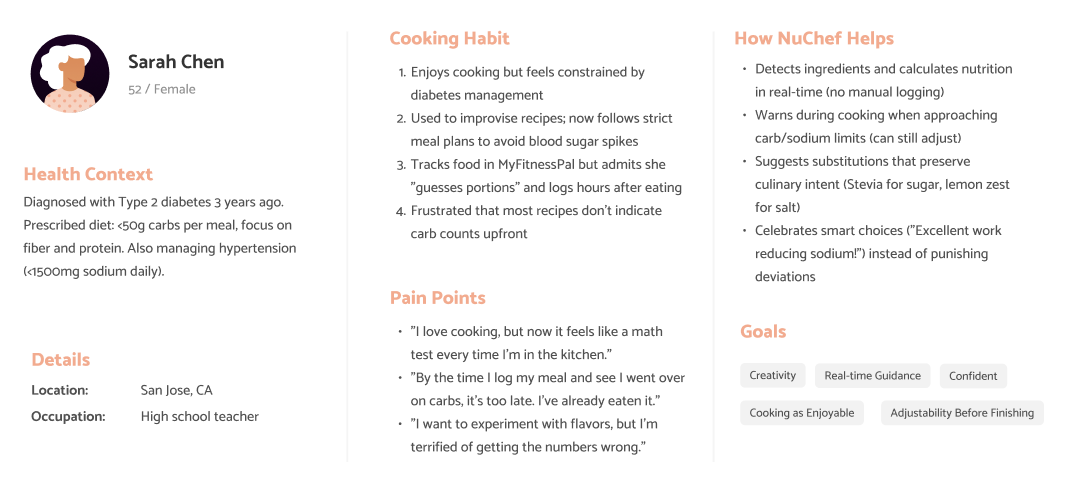
NuChef transforms cooking from a constant calculation into a supported creative experience — AI monitors health constraints in real-time and provides proactive guidance, while users maintain complete culinary autonomy and creative freedom.
NuChef addresses user frustrations by inverting the traditional health app model. Instead of expecting users to follow rigid meal plans and log data manually after eating (when it's too late to adjust), the system observes cooking in real-time — understanding context like a supportive partner. It analyzes ingredients as they're added, validates against personal health constraints automatically, and intervenes only when necessary with concrete, actionable substitutions. The design philosophy centers on respect: users know their creative goals, AI handles the complex calculations. It's a new way of managing health where AI thinks with you, monitoring constraints invisibly, while the canvas of your kitchen moves with your ideas.